Do You Know Your Cubital Superficial Vein Type? Which type are you?
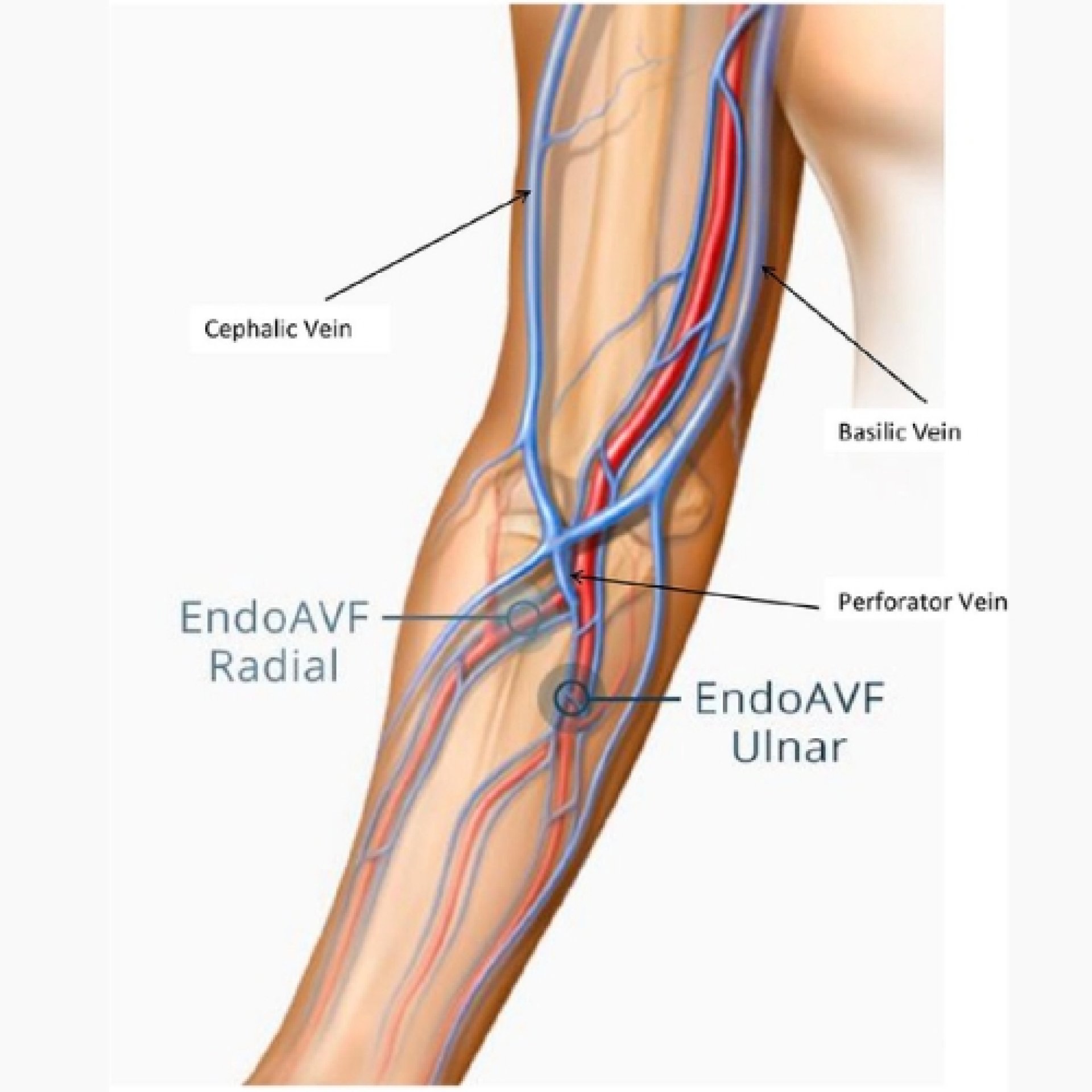
Knowing the cubital superficial vein type is highly beneficial, particularly in venipuncture and IV fluid administration, as it relates directly to patient safety, puncture success, and complication reduction.
1. Improving First-Attempt Puncture Success
Knowing that a patient has a Type II anatomy (median cubital vein connecting the cephalic and basilic veins) — the most common type, which is superficial and minimally mobile — means the vein is easy to access with a high success rate. Encountering Type III or IV, where no connecting vein is present, immediately signals that a standard puncture site may be difficult, requiring an alternative site or the use of a vein visualization device.
2. Reducing the Risk of Nerve and Arterial Injury
The basilic vein lies in close proximity to the median nerve and the brachial artery. When the vein type requires use of the basilic vein, extra caution is essential. Knowing the vein type enables selection of a safer puncture site that avoids critical surrounding structures.
3. Planning the Use of Vein Visualization Devices
When encountering vein types that are small or deeply located — such as Type III or Type IV — it immediately indicates the need for a vein visualization device such as VeinVU or VeinViewer.
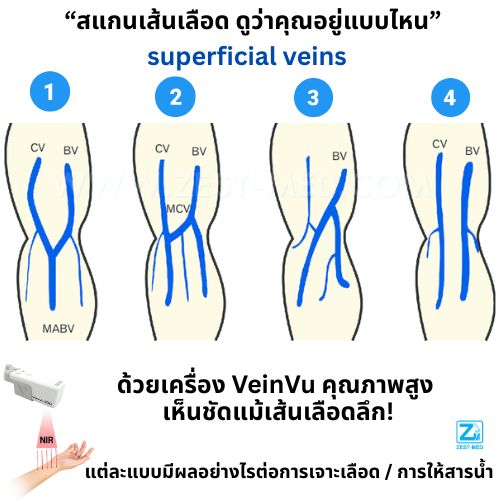
Getting it right from the start — reducing the number of repeat puncture attempts and minimizing patient discomfort.
4. Training and Assessing Staff Competency
Vein type information can be used by instructors to teach students and nurses how to classify vein types and plan puncture sites with greater accuracy. It also helps create skills assessment checklists to evaluate whether learners can select the appropriate vein for each type.
5. Improving Clinical Practice Guidelines
Research statistics (e.g., Type II is the most commonly found at 50.1%) support the development of standard venipuncture guidelines, while also allowing preparation of contingency plans for less common vein types. This reduces rates of mispuncture, hematoma formation, and sensory changes resulting from incorrect puncture sites.
In simple terms:
Knowing the vein type = knowing the shortcut to a safe, accessible vein — less pain, fewer misses.
VeinVu200 #VeinViewer #InfraredVeinViewer #เจาะเลือดสำเร็จครั้งแรก #ลดการเจาะพลาด #ลดรอยช้ำ
#ยกระดับมาตรฐานความปลอดภัย
Medical Technologist Dr. Tanyaluk Chongprasopchokchai