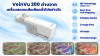



Regulatory documentation plays an important role in hospital medical device procurement. Learn why reviewing and verifying relevant US FDA, KFDA, and Thai FDA documentation matters when evaluating vein finders and making informed purchasing decisions.
22 ต.ค. 2026

A low-cost vein finder may offer poor value if it cannot provide clear visualization in real clinical situations. Discover the hidden costs of underused medical equipment and why practical performance, staff confidence, and clinical usability matter more than purchase price alone.
22 ต.ค. 2026

Purchasing a vein finder for a hospital requires more than comparing prices and technical specifications. Healthcare facilities should evaluate real-world imaging performance, vein visualization clarity, suitability for patients with difficult venous access, regulatory documentation, and after-sales support.
This article provides a practical vein finder purchasing checklist for hospital procurement teams, biomedical engineering departments, and nursing staff. It highlights key factors to consider before making a purchasing decision and introduces the VeinVu 200, featuring NIR 850 nm technology, Real-time Vein Mapping, and adjustable display modes. Learn why hands-on product trials and user feedback are important when selecting a vein visualization device for long-term clinical use.
20 ต.ค. 2026

Vein finders vary in features, technology, and real-world performance. Choosing the right vein finder should not be based on price alone. Healthcare facilities should also consider image clarity, real-time vein visualization, ease of use, and device certifications, especially when working with patients who have small, deep, or difficult-to-locate veins.
This article explores the key differences between vein finders, the potential challenges of choosing an unsuitable device, and the important factors healthcare professionals should evaluate before purchasing. It also introduces the **VeinVu 200**, a Near-Infrared (NIR) vein visualization device designed to help healthcare professionals identify vein patterns before IV insertion, blood collection, and intravenous therapy.
Discover how to select a vein finder that meets the practical needs of hospitals and healthcare teams, with a focus on usability, reliable performance, and verifiable medical device certifications.
16 ต.ค. 2026
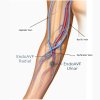
Know Your Cubital Superficial Vein Type Elevating safety standards in venipuncture and IV fluid administration — improving puncture success rates and reducing complications.
11 ส.ค. 2025

Venipuncture and IV fluid administration are basic procedures encountered daily in medical practice. However, the success of these procedures does not depend solely on the practitioner's skill — the vein structure pattern in the antecubital area also plays a significant role.
Research from Keimyung University School of Medicine, Korea used Infra-red Vein Imaging technology to examine superficial veins in over 200 real subjects, finding 4 main patterns that differ from one another, each of which directly affects the ease or difficulty of venipuncture and IV fluid administration.
11 ส.ค. 2025