Questions Biomedical Engineering Should Ask Before Buying a Vein Viewer
|
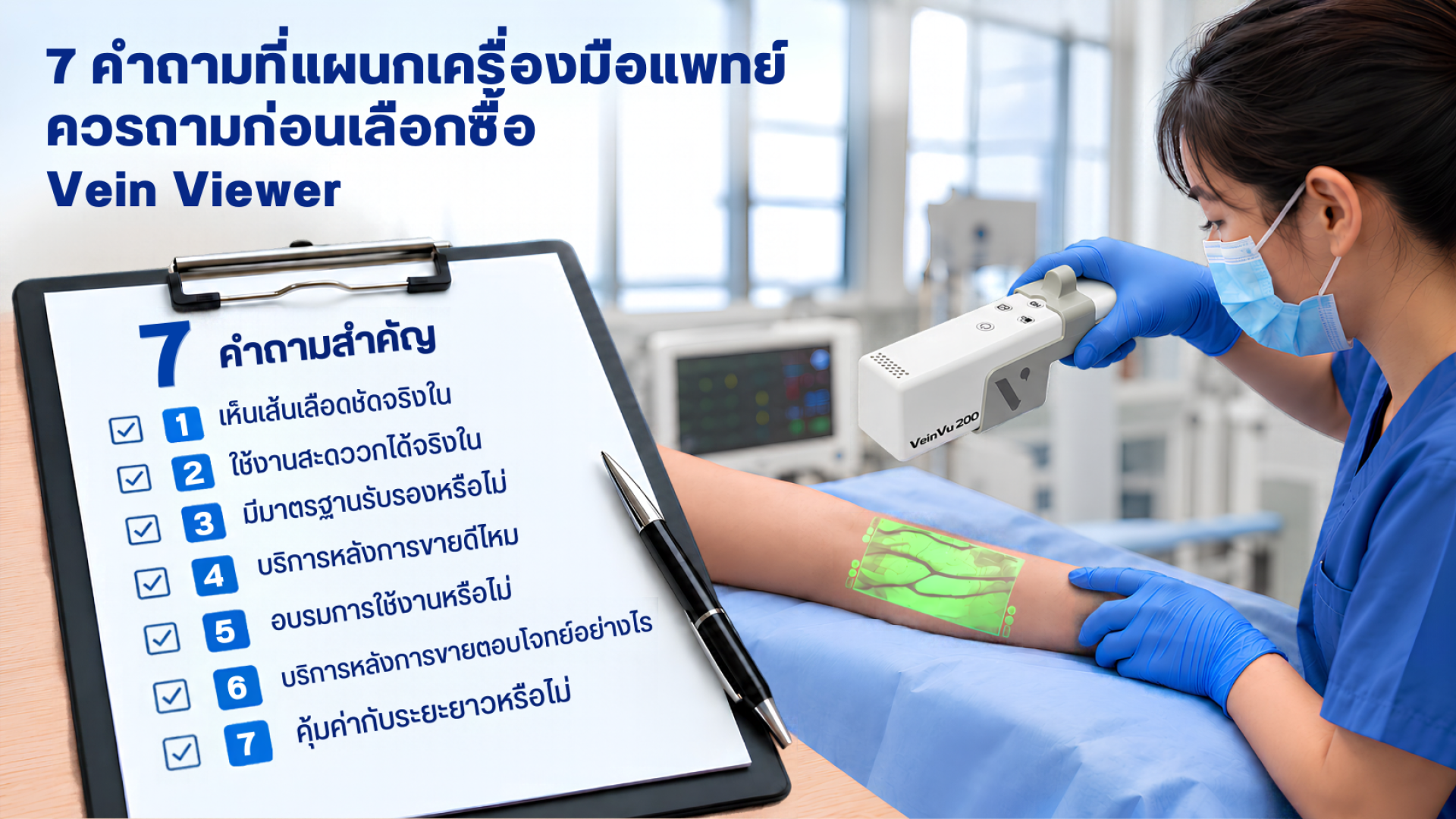
Choosing a vein viewer should not begin with “How much does it cost?” It should begin with “Does it meet the team’s needs in real use?”
|
Question 1: Are Veins Clearly Visible in Real Use?
Have nurses test the device across different patient groups rather than relying only on sample images.
Question 2: Does It Work in Difficult Cases?
Include children, older adults, patients with obesity or edema, darker skin tones, and patients undergoing chemotherapy in the evaluation where clinically appropriate.
Question 3: Are There Enough Display and Adjustment Options?
VeinVu 200 offers six display modes and three image sizes to adapt visualization to different patients and situations.
Question 4: Is It Portable Across Departments?
A suitable device should be easy to move and use across clinical departments, including chemotherapy day care and procedure rooms.
Question 5: Is Documentation Available for Verification?
Request and verify applicable documentation relating to US FDA, KFDA, and Thai FDA.
Question 6: Are Training and After-Sales Support Provided?
Training helps nurses gain confidence, while after-sales support encourages sustained use.
Question 7: Do Frontline Users Want to Keep Using It?
This is one of the most important questions. A device should not merely meet specifications; it should fit naturally into clinical workflows.
|
Use these seven questions to evaluate VeinVu 200 with ZEST-MED and schedule a trial before purchasing. |